HOTEL VETTING FOR WOMEN
The WTD Standard
A published scoring system for how a luxury hotel treats a woman traveling on her own, with the accessibility facts most hotels leave out.
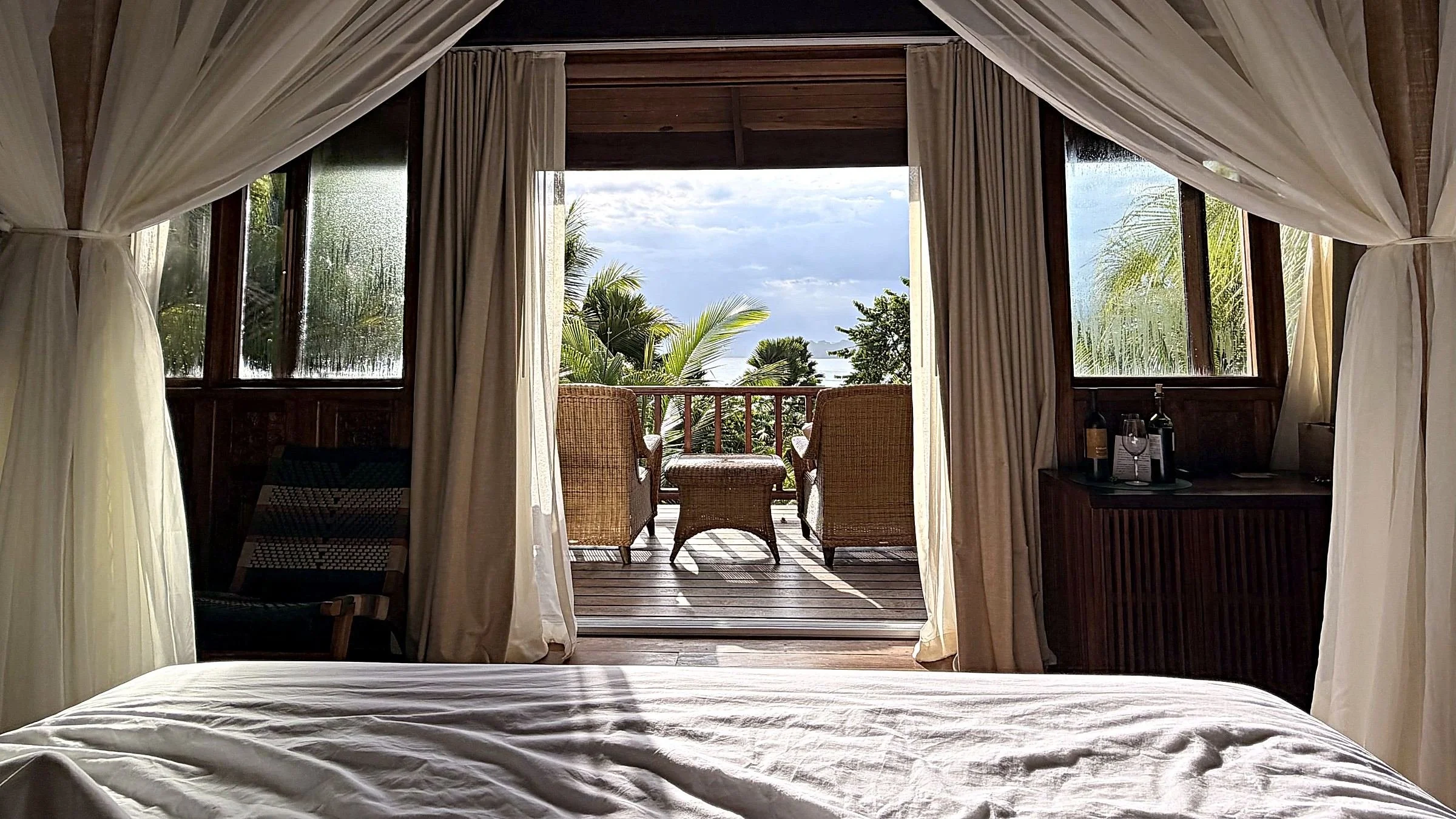
La Coralina Island House, Panama. A paid stay. Sept. 2026
I’m Kayla Mason, the founder of World Traveling Daughter. I’ve stayed in every property I score.
KaylaWHAT IT SCORES
Forty-one things on every stay, in five groups. Six of them are accessibility measurements I publish and never score, whether the hotel would like them public or not. The other thirty-five decide whether a property passes.
The core. Nineteen items that apply to every stay, whether a woman is on her own, with a partner, or with friends. Eight of them are required, which means a property can miss one and fail while doing everything else beautifully. How she's greeted at the desk. Whether anyone from the property reached out before she arrived. What the concierge does when she asks where to eat by herself, and whether they call ahead. Discretion with her name and her room number. What's actually in the room, and whether it was built for a woman who is getting ready by herself.
Three ways of traveling. Eleven items, scored as Solo, Partnered, or Traveling with friends. A hotel doesn't get to tell me it's good for women traveling together. I either saw it myself, or that part of the card stays empty.
Accessibility. Eleven items. Six access facts about the building, which I publish and never score, and five access answers, which I score. More on that below.
All forty-one are below. What I don't publish is how they're weighted and where the pass mark sits. A hotel that knows what I check can go and fix it, which is the point of writing any of this down. Knowing exactly how much it can fail and still pass is a different thing, and that part stays mine.
WHY SOLO IS THE TEST
I learned all of this on my own, and that's the reason the list works rather than a limit on it.
A woman by herself is the hardest guest for a hotel to get right. Nobody else is at the table to make an awkward seat less awkward. Nobody can go down to the desk for her when the room isn't right. There's no second person whose presence quietly tells the staff how to behave. Whatever a hotel does badly shows up faster when you're on your own.
So a property that looks after a woman traveling alone is nearly always fine when she comes back with her partner or with three friends. It doesn't tend to work the other way round. I've been in plenty of hotels that are lovely to a table of four and can't seat one woman without making it odd.
That's what I mean when I say solo is the proving ground and not the ceiling. It doesn't change what gets scored. If I was on my own, the partnered and friends sections stay empty, and the card says so.
THE FORTY-ONE ITEMS
Here they are. Written the way I'd say them out loud, not the way they sit on my card.
The core, required. Eight.
Miss one of these and there's no pass, whatever else the property does. The only exception is an item the property never got a fair chance to show me, and the card says when that happened.
Nobody asks if I'm waiting for someone when I check in on my own.
If I eat in the dining room by myself I get a real table, not the one by the kitchen or the restrooms, nobody rushes me, and nobody treats it as sad.
I can ask for a floor and get it, the room isn't backed onto a stairwell or an exit unless I asked for that, and the peephole and the second lock both work.
When I ask before booking whether there are women on the front desk and in housekeeping overnight, I get a straight answer, including when the answer is that they can't promise it.
The hotel can tell me who I go to if I feel uncomfortable, and what happens after I do, quietly and without a scene.
The property tries to reach me before I arrive, without being asked first, with a real name and a way to write back. Going through whoever booked the room still counts.
They keep their own car or a list of drivers they trust, they'll arrange an airport transfer at any hour, and they can tell me who's driving. A woman driver if I ask and one's available.
When I ask where I could eat on my own, the concierge names a place where I'll be seated well and calls ahead, the first time I ask.
The core, scored. Eleven.
These are the ones that tell me how much thought went into it.
Whatever's waiting in the room isn't only alcohol.
The safe fits a laptop and a jewelry case, not just a passport.
If I want to ask a woman about the spa, the shops, or where to eat, there's one to ask, or they tell me plainly that there isn't.
They tell me whether women are on overnight. If they can't promise it, they say so and they tell me what they do instead.
If I land in the evening I can still get a treatment, in the spa, in my room, or somewhere they book for me.
The robe fits a woman, not just an extra large.
There's a mirror and a plug somewhere I can actually get ready.
Somebody offers to talk me through the neighborhood when I arrive, where to walk and where to eat, before I have to ask.
If I'm not drinking there's something worth drinking, wherever they serve.
They have a rule about not saying a guest's name or room number out loud where other people can hear.
I can get period supplies from housekeeping without explaining myself.
Solo. Four.
Scored only on a stay I took on my own.
Nobody assumes a second person is coming to dinner, the spa, or anything else I booked.
I'm not charged more for being one person, or if I am, they tell me before I book.
I can get real food in my room late enough to cover a long flight.
Nobody remarks on me eating alone, drinking alone, or sitting alone.
Partnered. Three.
Scored only on a stay I took with a partner, so on a solo read these come back not assessed.
Both guests get spoken to. The keys and the bill don't go to the man by default.
Either guest can book the spa, a table, or a car, and it's taken seriously either way.
What she asks for happens without anyone checking with her partner first.
Traveling with friends. Four.
Same rule. If I wasn't on that trip, the section stays empty.
Two real beds when two real beds were booked, not a sofa bed sold as one.
Splitting the bill across a group at checkout isn't a production.
A table for four to eight is bookable at a normal dinner hour without a month's notice.
Booking the spa or a day out for a group doesn't come with a minimum spend nobody mentioned.
Access facts. Six, published and never scored.
These are facts about the building. I measure what I can and I ask for the rest, the card says which it was, and a property is never marked down for any of it.
The step count at the main entrance, any level change, and whether there's a step-free way in.
Which guest floors the lift reaches, and which ones it doesn't.
The narrowest doorway from the entrance through to an accessible room and its bathroom.
What that bathroom actually is: a roll-in shower, a transfer shower, an accessible bath, or none.
The bed height, and whether it can be changed.
Whether there's accessible parking and a drop-off.
Access answers. Five, scored.
These are what the property chose, not what the building is.
What the hotel publishes about its access matches what's actually there.
Once an accessible room is booked it stays booked, and doesn't get resold to someone who doesn't need it.
Somebody can answer a specific measurement question before I book, a door width or a bed height, or go and find the person who can.
They tell me what they can't do before I book, not after I arrive.
A guest can reach a person about access herself, without going through a booking engine or an advisor.
THE FOUR VERDICTS
DID NOT PASS
It did not meet the standard, and the card says exactly where.
INCOMPLETE
I could not observe enough to judge it fairly. That’s a statement about my read, not about the hotel.
CONDITIONAL
Close, with something specific named that has to change.
PASS
Every Core required item met, and the scored sections above the line.
THE EVIDENCE
Every scored item on every card is tagged with how I know it. There are four sources.
What I saw, on the stay. Roughly half of every card, and the half no research substitutes for.
The booking record. Whether a property reached out before I arrived is settled by my email archive, not by my memory. Memory is generous about this and the archive is not.
Photographs, taken at the time. The accessibility measurements can't be reconstructed after checkout.
A written enquiry to the property, asking the questions only the hotel can answer.
If none of those reach an item, it's marked not assessed and it counts against nothing.
A card that guesses is worse than a card with gaps in it.
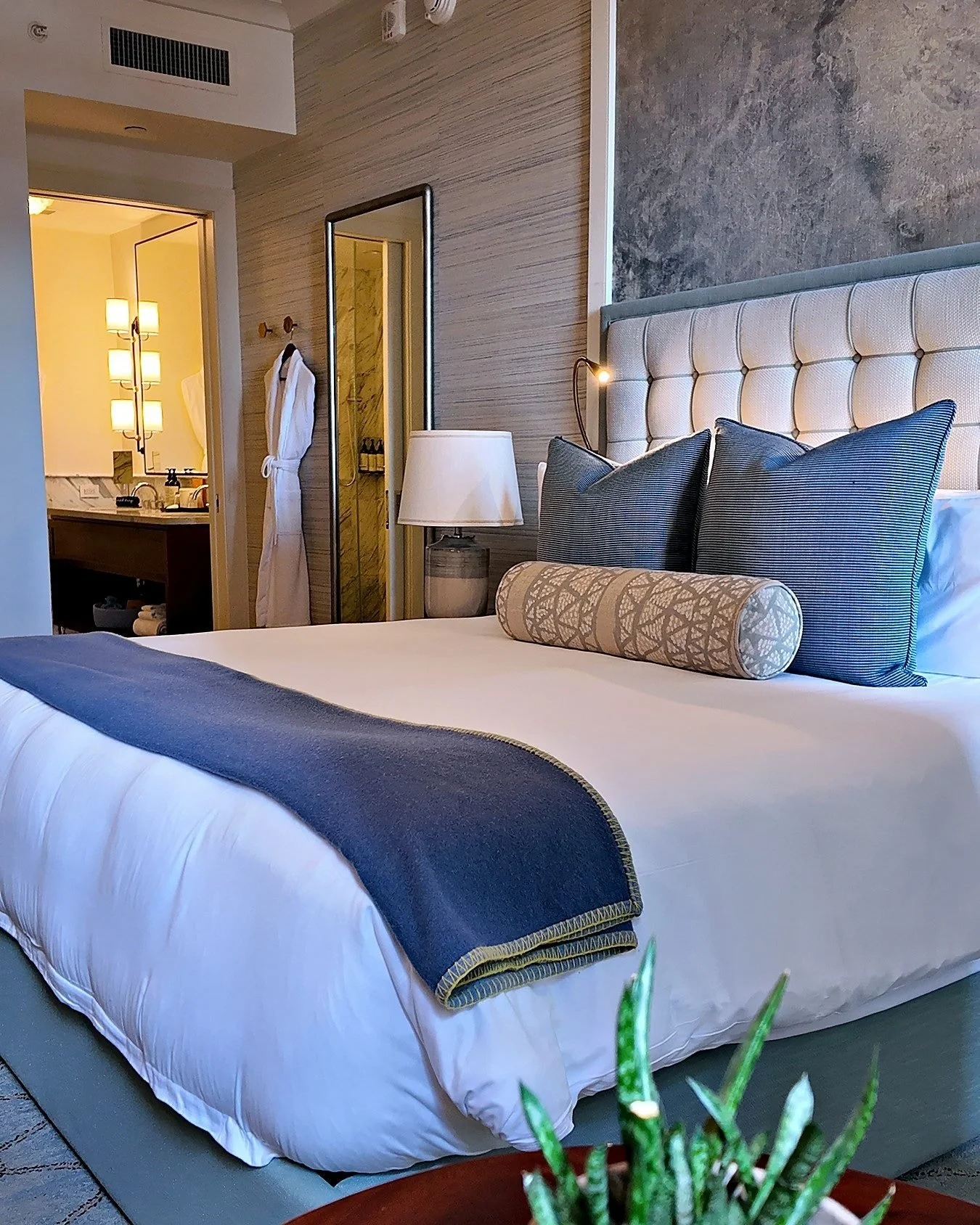
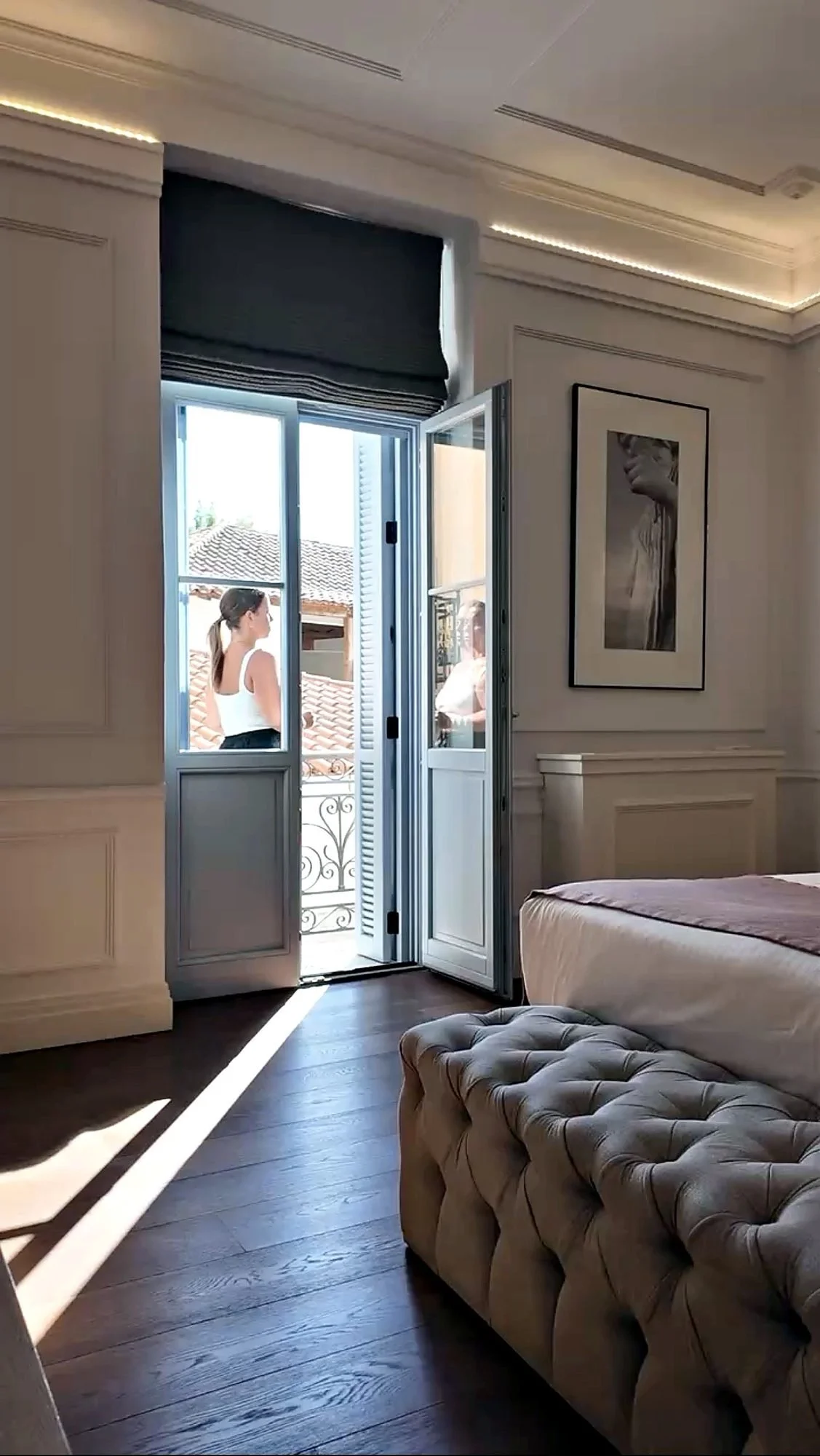
The room, with the robe where it should be.
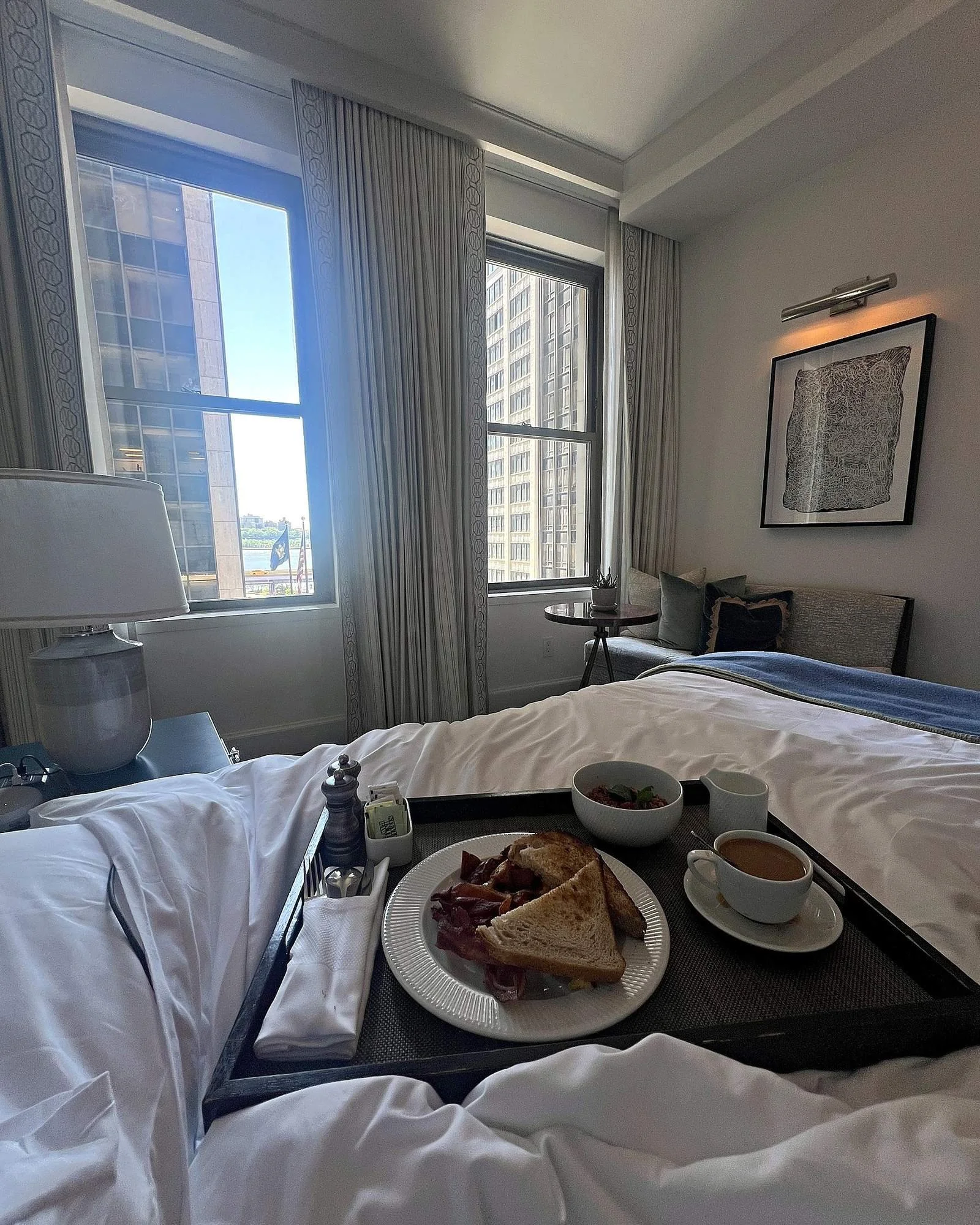
Breakfast in bed, the morning after a late arrival.
ACCESSIBILITY
Measured and disclosed, not rated
For every property I publish six facts.
The step count at the main entrance, any level change, and whether there's a step-free way in
Which guest floors the lift reaches, and which ones it doesn't
The narrowest doorway from the entrance through to an accessible room and its bathroom
What that bathroom actually is: a roll-in shower, a transfer shower, an accessible bath, or none
The bed height, and whether it can be changed
Whether there's accessible parking and a drop-off
Those six are never scored. A nineteenth-century building in Athens has the stairs it has, and rating it against a new-build in Miami would tell you nothing useful.
What I score is what the property chose: whether what it publishes matches what's really there, whether staff answer a specific question honestly or just reassure me, and whether a guest can reach a person about access herself. All five are listed above.
I don't claim to speak for people with access needs, or to tell anyone what moving through a building is like with a disability, because that isn't mine to say. I measure and I publish, and the facts are there so you can decide for yourself.
WHAT I DISCLOSE ON EVERY CARD
How the room was booked. A preferred rate, a retail rate, or a stay where the property knew I was an advisor. Those are three different reads and they don't tell you the same thing.
Whether I earned a commission on that stay.
That my written enquiry went out openly, as an advisor, with my name on it. That gets better answers than a stranger would get. So a card can tell you how a property treats an advisor who asks, and it can't tell you how it treats a woman who emails on a Tuesday with no title after her name. I'm not going to blur those.
When the stay was, and when I read it. Both dates are on every card.
WHAT A HOTEL CAN AND CANNOT DO
CANNOT
-
No property has ever paid to be scored.
-
Payment has never changed a score and never will.
-
Every hotel is given the same set of questions and same time to respond.
CAN
-
I am looking for honest and clear answers to specific questions.
As an Independent Affiliate of Fora Travel, I earn a booking commission on stays I book through my own agency, including my own. That's disclosed on every card, along with how the room was booked. It's on the card because you should be able to see it, not because it changed anything.

FAQS
Do you tell hotels they’re being scored?
Not in advance. My written enquiry says plainly that I write publicly and may reference their answers, so nothing gets published that they didn't know was on the record. I don't announce a scoring instrument, because a hotel that knows it's being scored answers to score well.
Can a hotel ask to be removed?
No. Once I've stayed and measured, the read publishes.
Can a hotel apply?
Not right now. I score properties I’ve stayed in, from a backlog of my own stays.
Is it only for women traveling alone?
No. It scores Solo, Partnered, and Traveling with friends. Solo is the hardest read and the one I do most, and a property that passes solo tends to be good to a woman however she arrives.
Is this a safety rating?
No, and deliberately not. I score hospitality: whether a hotel treats a woman on her own with the same ease it would treat anyone else. I don't certify that anywhere is safe, because nobody honestly can.
Why publish the failures?
Because a list where everyone wins is an advertisement.
How current is a read?
Eighteen months. Hotels change management and a two-year-old read isn’t a fact about the hotel today, it’s a fact about the hotel then.
When does the first list come out?
Autumn 2026, a couple of properties at a time.
INDEPENDENCE
Hotels cannot pay to be scored, and no property has ever paid to be scored. Payment has never changed a verdict and never will. I pay for every stay I read. I earn a booking commission on stays I book through my own agency, including my own, and each card says how its room was booked and whether a commission was earned.
WHAT THIS IS NOT
The WTD Standard scores hospitality: how a luxury hotel treats a woman on her own. It is not a safety certification and does not guarantee any outcome at any property. Accessibility facts are measured and disclosed, not rated.
CURRENCY
Every card carries the date of the stay and the date of the read. A read older than eighteen months, or one whose property has changed ownership or brand, is retired until re-read.